Do I Have a Slab Leak? How to Check in 15 Minutes
If your water bill has jumped or a part of the floor feels warm, a fifteen-minute meter test tells you whether water is leaking somewhere.
Request a plumberWhy slab homes are different
Most Lakeland houses are built on concrete slabs, with water lines in or under the concrete. A leak there can run for weeks without a puddle.
Step 1: turn everything off
Shut off all taps, the dishwasher, washer, ice maker and irrigation. Make sure no toilet is refilling.
Step 2: read the meter
Find the meter in its box near the street and look for the small leak indicator. If it moves, water is flowing somewhere. If there's no indicator, write down the reading, wait an hour and check again.
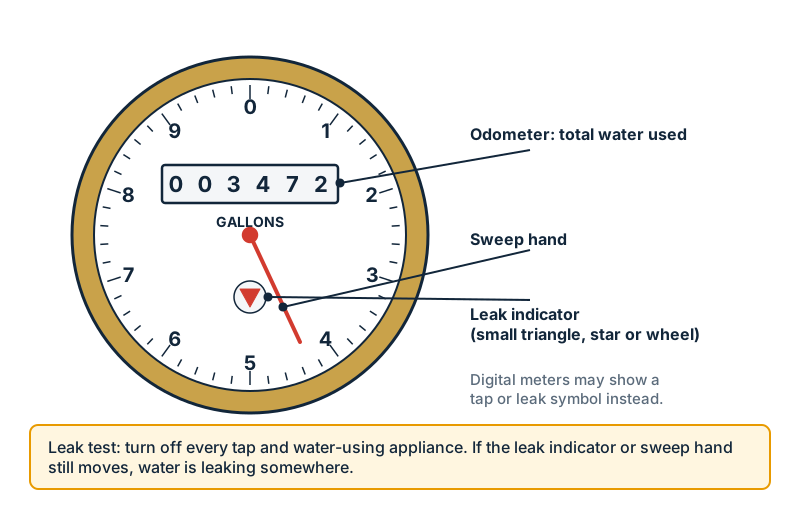
Step 3: narrow it down
Close the main shut-off at the house. If the meter stops, the leak is inside the house. If it keeps moving, the leak is on the line between the meter and the house.
Other clues
A warm spot on the floor points to the hot water line. Cracked tile, a mildew smell under carpet, or the water heater running when nobody is using hot water are all signs.
Next steps
A plumber uses pressure tests and listening equipment to pin down the spot. See slab leak detection and repair.
Don't ignore a small one
A slow slab leak can keep running for months. Besides the water cost, it can soften the ground under the slab and damage flooring. Finding it early usually means a smaller, cheaper repair, and fewer square feet of floor to lift.
More plumbing guides
Plumbing trouble in Lakeland?
Send a request and a plumber will get in touch. Requests answered 7 days a week.
Prefer email? [email protected]